APOSTLE
arrow_back AI Creative Director
Module 01 Creative Direction Fundamentals

Art-Directed Prompts and the Taste Gap

Learn the difference between vague and art-directed prompts, master the 7-element prompt anatomy, and use camera names as powerful style shortcuts.

schedule 15 min
signal_cellular_alt Beginner
menu_book Lesson 01 of 14

Art-Directed Prompts and the Taste Gap

Vague vs. Art-Directed Prompts

Most people write prompts like search queries. Creative directors write prompts like creative briefs. The difference is everything.

Side-by-Side Comparisons

Vague Prompt Art-Directed Prompt
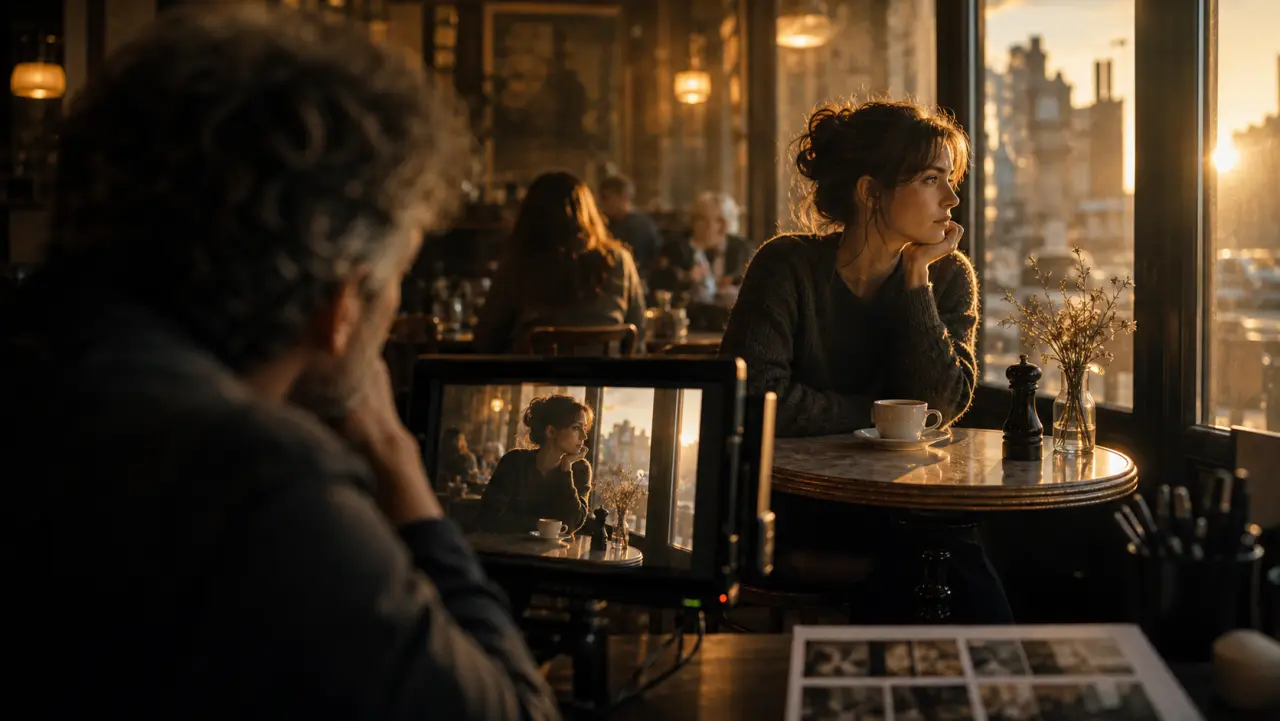
"a woman in a cafe" "A 30-year-old woman with dark curly hair sits alone in a Parisian cafe at golden hour, shot on Kodak Portra 400, shallow depth of field, warm ambient light filtering through lace curtains, melancholic mood, captured with a Contax T2 at f/2.8"
"futuristic city" "A sprawling cyberpunk metropolis at blue hour, aerial view from 200m, neon kanji signs reflecting off rain-slicked streets, Blade Runner color palette, shot on RED Komodo with anamorphic lens flare, hazy atmosphere, 21:9 aspect ratio"
"a portrait" "Editorial close-up portrait of a freckled woman in her 40s, Rembrandt lighting with a single softbox camera-left, catchlights in eyes, visible skin pores and texture, shot on Hasselblad X2D 100C, f/2.8, muted earth-tone wardrobe, Annie Leibovitz style"
"product photo" "Minimalist product photography of a matte black ceramic coffee mug on a raw concrete surface, single overhead softbox with subtle rim light, long shadow at 45 degrees, negative space camera-right, shot on Phase One IQ4 150MP, commercial advertising style"

The vague prompt gives the AI too many decisions. The art-directed prompt removes ambiguity and encodes professional visual language.


The 7-Element Prompt Anatomy

Every strong prompt contains up to seven elements. You don't need all seven every time, but knowing them lets you control exactly what you get.

# Element Purpose Example
1 Subject Who or what is in the frame "A weathered fisherman in his 60s"
2 Action / Pose What the subject is doing "leaning against a wooden boat hull, arms crossed"
3 Environment Where the scene takes place "on a misty dock at a small Portuguese fishing village"
4 Medium The photographic or artistic medium "shot on Fuji Pro 400H, 35mm film grain"
5 Lighting How the scene is lit "overcast natural light with soft directional fill from the left"
6 Mood The emotional tone "quiet dignity, contemplative, documentary tone"
7 Composition Framing and camera position "medium shot, rule of thirds, shallow depth of field at f/2"

Formula: [Subject] + [Action/Pose] + [Environment] + [Medium] + [Lighting] + [Mood] + [Composition]


Camera Names as Style Shortcuts

Naming a specific camera in your prompt triggers a constellation of visual associations the model has learned from millions of tagged photographs.

Camera Visual Signature Best For
Hasselblad X2D Medium-format look, extreme detail, creamy bokeh, rich color depth High-fashion editorials, luxury product, fine-art portraits
Canon EOS R5 Sharp, clean, versatile color science, natural skin tones Commercial photography, weddings, general-purpose realism
Leica M11 Distinctive rendering, subtle vignetting, rangefinder character, classic tones Street photography, documentary, photojournalism
Sony A7 IV Clinical sharpness, accurate color, high dynamic range Corporate, architecture, landscape
RED Komodo Cinematic, filmic motion quality, wide dynamic range Cinematic stills, film-style portraits, dramatic scenes
Contax T2 Warm tones, gentle falloff, Zeiss rendering, analog character Lifestyle, fashion, nostalgic editorial
GoPro Hero Ultra-wide distortion, action perspective, high saturation Action sports, immersive POV, extreme environments
Disposable camera Light leaks, soft focus, flash-on-camera, color shifts, grain Lo-fi aesthetic, party photography, authentic casual vibes

Pro tip: Combine a camera name with a specific lens focal length for even more control: "shot on Leica M11 with 50mm Summilux at f/1.4."


The Taste Gap

Ira Glass famously described the gap between your creative taste and your current ability:

"Nobody tells this to people who are beginners. All of us who do creative work, we get into it because we have good taste. But there is this gap. For the first couple of years you make stuff, it's just not that good... your taste is still killer. And your taste is why your work disappoints you."Ira Glass

With AI, this gap is inverted. The tool can produce technically stunning images instantly. The new gap is between the output the AI gives you by default and what a trained creative eye knows to ask for.

"AI doesn't replace the need for a creative eye — it amplifies it. The quality of output is directly proportional to the sophistication of the input."Nielsen Norman Group

"The designers who thrive with AI tools aren't the ones who type the best keywords — they're the ones who understand visual language deeply enough to direct the machine."Web Designer Depot

In the AI era, taste IS the skill. Your ability to evaluate, refine, and direct is what separates commodity output from professional-grade creative work.


Exercise

The 20-Image Taste Calibration

  1. Write a single art-directed prompt using all 7 elements.
  2. Generate 20 images from that exact prompt (use --repeat 20 in Midjourney or run the same prompt 20 times in Gemini).
  3. Rate each image 1-5 on: composition, mood accuracy, technical quality, and "would I show this to a client?"
  4. Pick your top 3. Write down exactly what makes them better than the rest.
  5. Revise your prompt based on what you learned about your own taste. Generate 20 more and compare.

This exercise trains the most important muscle in AI creative direction: your eye.

Copied to clipboard